Speakers
ISCR Virtual Conference 2026
Meet our Keynote Speakers
Asia/Australia
Consciousness and Craving: Neuroscientific and Buddhist Perspectives
Moderated by Eric Garland
Learn more about this session
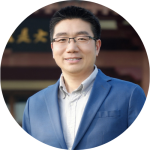
Dr. Yuzheng Hu
Principal Investigator and Vice Dean
Zhejiang University
Biography
Dr. Yuzheng Hu is a Principal Investigator and Vice Dean at the Department of Psychology and Behavioral Sciences, Zhejiang University, where he also serves as a doctoral supervisor. His research focuses on the neural mechanisms underlying addiction and their interventions. Utilizing fMRI techniques, he investigates the neural correlates of compulsive behaviors in addiction and explores the therapeutic potential of mindfulness-based interventions. His work has been published in leading journals such as PNAS, Nature Communications, JAMA Psychiatry, Science Advances, Brain, and NeuroImage. In line with the conference theme, his research bridges neuroscience and contemplative practice, shedding light on how mindfulness can modulate craving and conscious awareness, offering novel insights into the treatment of addictive disorders.
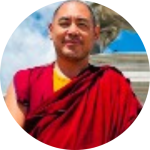
Geshe Lodoe Sangpo
Biography
Geshe Lodoe Sangpo is a Tibetan monastic dedicated to bridging the heart and the mind. After more than two decades of rigorous traditional study, he earned the prestigious Geshe Lharampa degree. Yet, he remains an eternal student, passionately exploring the overlap between Buddhist philosophy and modern neuroscience.
A graduate of the Emory-Tibet Science Initiative and a staff member at the Science for Monks and Nuns organization, Geshe-la serves as a vital bridge between wisdom traditions. His work spans collaborative research with international scientists on Tukdam (meditative state after death), exploring the transformative potential of Dream Yoga, and serving with the Tenzin Gyatso Science Leadership Association. Underpinning all his efforts is a simple, core conviction: science and spirituality are complementary partners in easing human suffering.
As Director of the Gajang Science Centre, Geshe-la shares guided meditations and spiritual guidance across various platforms. He finds his greatest joy in empowering young people and global audiences with practical tools for cultivating compassion, mental well-being, and lasting inner peace.
Africa/Europe
Consciousness Across Cosmologies: Nondual Meditation, the Ritual Use of Psychedelics, and a Neuroscientific Perspective
Moderated by Eve Ekman
Learn more about this session
Nondual Tibetan Buddhist meditative practices and the ceremonial use of psychedelics in the South American Amazon can give rise to profound shifts in perception and sensory experience. While these ancient wisdom traditions may not share the same concepts, language, or cosmologies, experiences and insights are sometimes described in strikingly similar ways. “Nonduality” is not necessarily a term used in psychedelic ceremonial traditions, but that does not mean the experience is absent. The rebalancing of energies through death and rebirth may offer another way to explore this dimension of the medicine. What can be gained by exploring shared elements within these approaches? Does science need new ways to explore states of clear light, energetic balance, and reharmony?
This conversation brings together neuroscience, sustained contemplative practice, and Indigenous ceremonial traditions to explore these questions from distinct perspectives. Neuroscientist Antoine Lutz will share emerging research on nondual awareness and the challenge of distinguishing meditative experiences from recognition of the “nature of mind.” Buddhist practitioner and teacher Stéphane Offort will offer a first-person perspective informed by decades of meditation in the Mahamudra and Dzogchen lineages and his recent participation in research with 5-MeO-DMT. Celina De Leon will bring her experience with the ritual use of ayahuasca/yagé to explore how ceremony, lineage, relationship, and worldview shape altered states of consciousness, and how sacred insights are integrated into everyday life.
Moderator Eve Ekman, a contemplative social scientist, practitioner, and teacher who has led first-person phenomenological research on psychedelics and Vajrayana practices, will guide the dialogue across these different ways of knowing.
Together, we will ask what happens in extraordinary states, how traditional practices and worldviews shape them, how we distinguish experience from realization, and what these perspectives can teach us about consciousness itself.
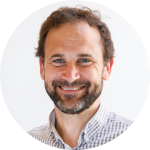
Antoine Lutz
Director of Research
French National Institute of Health and Medical Research (Inserm)
Biography
Antoine Lutz is Director of Research at the French National Institute of Health and Medical Research (Inserm), based at the Lyon Neuroscience Research Center, where he co-leads the Experiential Neuroscience and Mental Training team. Trained in engineering, philosophy, and cognitive neuroscience, he completed his PhD with Francisco Varela, applying the neurophenomenology research program for the first time to study the neural correlates of attention and perception. As a postdoctoral researcher with Richard Davidson at the University of Wisconsin–Madison, he used neuroimaging to investigate mindfulness and compassion meditation and their effects on attention and emotion regulation. His research group now studies the neurophenomenology of non-dual mindfulness meditation and its effects on consciousness and self-processes. The team uses cognitive, affective, and social neuroimaging paradigms with EEG, MEG, and fMRI. He also coordinates the NOM project (nomstudy.org), an international consortium that will study how a traditional Buddhist three-year retreat affects perception, the self, and wellbeing. The project draws on phenomenology, religious studies, molecular biology, and cognitive science.
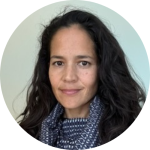
Celina De Leon, M.Div
Co-Director
Posada Natura
Biography
Celina De Leon, M.Div is the co-director of Posada Natura retreat center in Costa Rica and founder of Circle of Sacred Nature church. She has 25 years of experience working with ayahuasca and has been a longstanding apprentice of an indigenous healer from the Amazon of Colombia for the past 17 years. She is an adjunct faculty at the Graduate Theological Union teaching at the intersection of psychedelics, entheogens, and spiritual care. As an international advisor to the Organization of Indigenous Outreach and Conservation she supports capacity building for traditional medicine conservation, language revitalization, and indigenous led science initiatives in the Kamentsa indigenous community of Colombia. She is also a longstanding yoga and meditation practitioner.
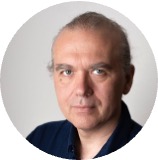
Stéphane Offort
Meditation Teacher and Trainer
Eurythmia
North and South America
Embodiment, Spirituality, and Complex Systems
Moderated by Dave Vago
Learn more about this session
This keynote panel looks at the body not as a collection of parts, but as a dynamic, self-organizing system whose boundaries are less defined and more interconnected than originally thought. The two speakers’ pioneering research converges on a fascial-interstitial system – a layered network of fluid-filled connective tissue that runs throughout the body and signals across every organ boundary.
Helene M. Langevin, MD, former Director of the National Center for Complementary and Integrative Health, will present an anatomical network of superficial, deep, visceral, and neural layers that connect muscles, bones, nerves, vessels, and internal organs. It transmits mechanical force, senses the body’s position, and coordinates movement. Her research looks at the system’s role in chronic musculoskeletal pain, inflammatory processes, and at how it may explain why acupuncture, manual therapies, stretching, and movement-based therapies work. She found that acupuncture points largely line up with connective tissue planes, which suggests that meridians may follow real anatomical pathways.
Neil Theise, MD, of NYU Grossman School of Medicine, will describe his pioneering work on the interstitium as a core signaling hub operating across time and space. A distinctive feature of his approach is how he treats boundaries as real, but permeable, shifting depending on the scale you look at. Using complexity theory as a bridge between science, philosophy, and contemplative accounts of consciousness, he treats the body as systems nested within systems. He suggests that consciousness, selfhood, and interconnectedness are best understood through these relational layers rather than by reducing them to isolated parts.
Moderated by David Vago, PhD, the conversation asks whether contemplative science needs a parallel shift: from locating awareness in the brain to understanding how it arises from, or is expressed through, a distributed network of systems across the whole body? Might the dissolution of self–other boundaries reported in non-dual, transcendent, and spiritual experiences have functional and tractable counterparts in the body’s distributed network of cellular communication? And might traditional maps of life force, such as the meridians of Chinese medicine, the nādīs of Ayurveda, and the rtsa of Tibetan medicine, correspond to the fascial–interstitial system? If so, how should contemplative and integrative health sciences engage with them?
References:
Chen, W. G., Schloesser, D., Arensdorf, A. M., Simmons, J. M., Cui, C., Valentino, R., Gnadt, J. W., Nielsen, L., St. Hillaire-Clarke, C., Spruance, V., Horowitz, T. S., Vallejo, Y. F., & Langevin, H. M. (2021). The emerging science of interoception: Sensing, integrating, interpreting, and regulating signals within the self. Trends in Neurosciences, 44(1), 3–16. https://doi.org/10.1016/j.tins.2020.10.007
Cooper, A. Z. (2026, May 11). The human body’s hidden pathways. The New York Times Magazine. https://www.nytimes.com/interactive/2026/05/11/magazine/interstitium-anatomy-acupuncture-medicine.html
Langevin, H. M., & Yandow, J. A. (2002). Relationship of acupuncture points and meridians to connective tissue planes. The Anatomical Record, 269(6), 257–265. https://doi.org/10.1002/ar.10185
Langevin, H. M., Churchill, D. L., & Cipolla, M. J. (2001). Mechanical signaling through connective tissue: a mechanism for the therapeutic effect of acupuncture. The FASEB Journal, 15(12), 2275-2282. https://doi.org/https://doi.org/10.1096/fj.01-0015hyp
Nemetz, L. D., Theise, N. D., Stecco, C., Langevin, H., Schleip, R., Stecco, A., & Pratt, R. L. (2026). Towards convergence: Evidence for the fascia system as a body-wide continuum. Clinical Anatomy. Advance online publication. https://doi.org/10.1002/ca.70172
Stecco, C., Pratt, R., Nemetz, L. D., Schleip, R., Stecco, A., & Theise, N. D. (2025). Towards a comprehensive definition of the human fascial system. Journal of Anatomy, 246(6), 1084–1098. https://doi.org/10.1111/joa.14212
Theise, N. D., & Kafatos, M. C. (2013). Sentience everywhere: Complexity theory, panpsychism & the role of sentience in self-organization of the universe. Journal of Consciousness Exploration & Research, 4(4), 378–390.
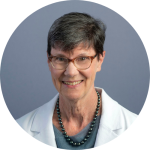
Helene Langevin, MD
Former Director
NIH National Center for Complementory and Integrative Health
Biography
Helene Langevin, M.D., is currently Research Director at the Osher Center for Integrative Health, University of Vermont. Prior to this, she was the Director of the National Center for Complementary and Integrative Health (NCCIH) from 2018 to 2025, Director of the Osher Center for Integrative Medicine at Harvard Medical School from 2012 to 2018, and professor of neurological sciences at the University of Vermont Larner College of Medicine until 2012.
As the principal investigator of several NIH-funded studies, Dr. Langevin has centered her research on connective tissue mechanobiology and the effects of stretching on inflammation and cancer. Dr. Langevin received her medical degree from McGill University in Montreal, Canada. She completed a postdoctoral research fellowship in neurochemistry in the Medical Research Council Neurochemical Pharmacology Unit at the University of Cambridge, England, and a residency in internal medicine and postdoctoral fellowship in endocrinology and metabolism at the Johns Hopkins Hospital in Baltimore.
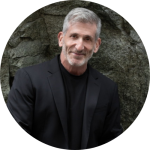
Neil Theise, MD
Professor of Pathology
NYU Grossman School of Medicine
Biography
Neil Theise is a physician-scientist and professor of pathology at the NYU Grossman School of Medicine. He is considered a pioneer of adult stem cell plasticity and the anatomy of the human interstitium. Dr. Theise’s award-winning book, Notes on Complexity: A Scientific Theory of Connection, Consciousness, and Being (Spiegel & Grau, 2023), calls on his studies in complexity theory to address topics such as consciousness studies and science-religion dialogue. Recently, his scientific understanding of integrative medicine has been highlighted in The New York Times, on Radiolab and The Telepathy Tapes, and in the documentary “Phenomena Healing.” He is a senior student of the Village Zendo in New York City. His forthcoming book from Spiegel & Grau, Sarah in the In-Between, details his mother’s experiences with non-local consciousness in her later years.